
To mark Women’s History Month, President Emerita Thea Burgess shares a few of her recommended reads on women in the Revolutionary era.
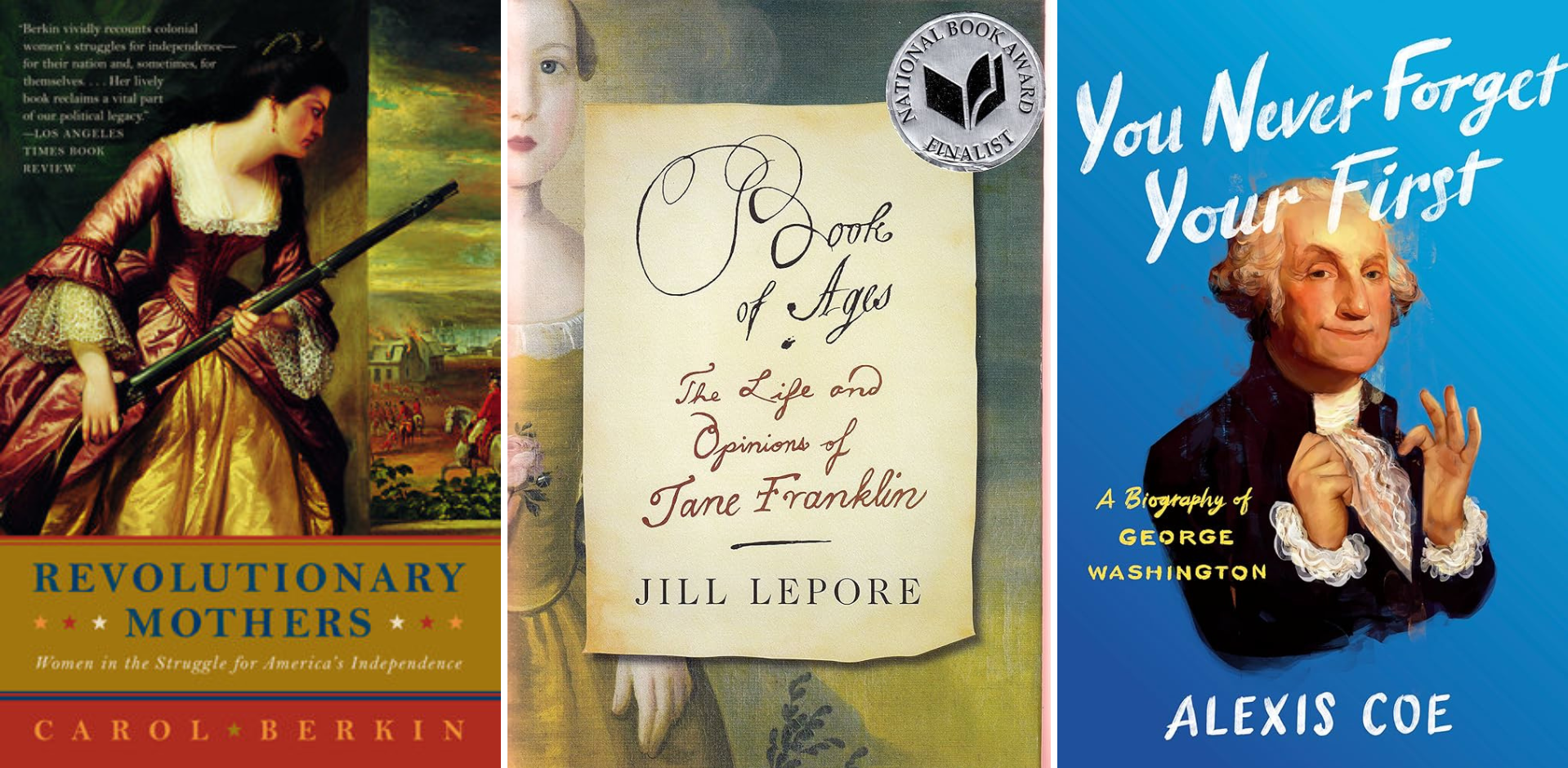
How many women can we name from the American Revolution? Here are the obvious few: Martha Custis Washington, Abigail Adams, Betsy Ross, Molly Pitcher, and Sybil Ludington. Here in the Hudson Valley we think of Janet Livingston Montgomery of Clermont whose husband Richard Montgomery perished in the unsuccessful invasion of Quebec. History aficionados will doubtless be able to identify more; however, while most of us can rattle off names of Patriots and Loyalists, signers of the Declaration of Independence, generals of the Continental Army, and even leaders of the British forces, we are hard pressed to come up with women of the era.
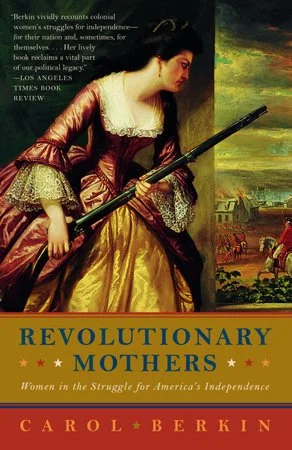
And yet, women and girls played significant roles on both sides of the conflict. As historian Carol Berkin notes in Revolutionary Mothers: Women in the Struggle for America’s Independence, “Too often the war for independence is portrayed as an exclusively male event “ (xi), yet women, including indigenous women and enslaved women, were integral forces in the American Revolution.
Starting with an overview of the Englishwoman’s place in colonial society, Berkin traces how and why the fight for liberty from British rule was shared by men and women from the conflict’s beginning: following the Stamp Act of 1765, as men made speeches and organized against the British, women were ready to act as well. Berkin explains, “But when the call went out for a boycott of British goods, women became crucial participants in the first organized opposition to British policy” (13).
What could mere women do? They were important in so many daily decisions surrounding their families’ purse strings. An example: homespun clothes were made to negate the need to purchase British ready-made imports (19) and spinning bees were held (18). This is just one aspect of their involvement which expanded to other arenas as revolutionary ideas spread. These many, many examples of sacrifices by women on the domestic front prove women too sought liberty.
As the conflict progressed, women’s experiences varied depending upon their nationalities, social positions, race, economic statuses, and relationships to the men around them, of course. Berkin describes the horrors faced as battles occurred in peoples’ towns and where often homes, crops, and livestock were destroyed if the residents survived; women faced the threat of violence at every turn, especially if the men of their families were at battle; the dilemma that indigenous women encountered while they—the English and colonists were surprised at how equally women’s voices were heard in indigenous peoples’s councils (109)—and the men of their tribes weighed whether to support the British or the colonists, even as their own ancestral lands and settlements were besieged by both sides; the tragedies of enslaved women and men who might be promised freedom if they fought for one side or the other, depending on the outcome of the war, only to find those promises null and void once the fighting ended; the struggles that Loyalist wives and daughters grappled with, and so on.
Berkin addresses these and many other aspects of the Revolutionary period. A theme that resonates is the degree to which the American Revolution impacted everyone, and Berkin offers many examples of everyday people caught up in the fight. Too often their experiences have been overlooked by standard histories. However, Berkin notes,
“Whatever it is, the way you tell your story online can make all the difference. The young girls and matrons, the schoolteachers and African American slaves, the wealthy widows and camp followers whose stories are preserved in local histories and family scrapbooks rather than scholarly tomes give evidence that life during the American Revolution was indeed as the popular British song put it, ‘the world turned upside down.’ The war for independence allowed, and often propelled, these women to step out of their traditional female roles for the briefest of moments and to perform deed that surprised them perhaps as much as they surprised others (146).”
We only need to be look for them to be informed.
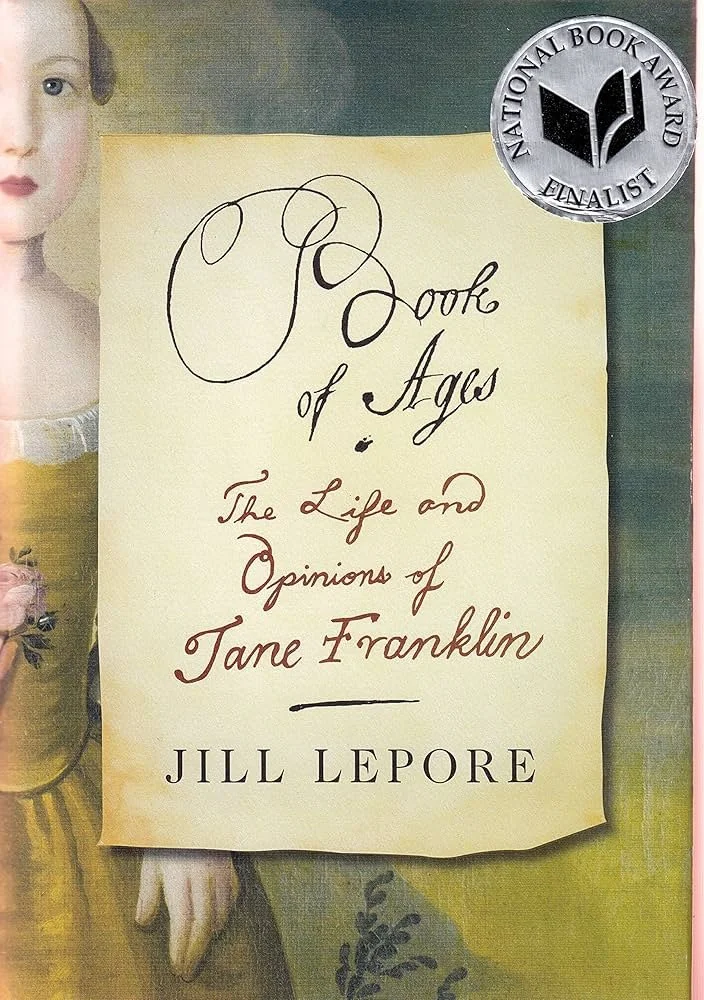
It’s these overlooked women who interest historian Jill Lepore, but there is one who especially deserves our examination, she argues. In Book of Ages: The Life and Opinions of Jane Franklin, Lepore focuses the youngest sister of Benjamin Franklin—Jane Franklin Mecom. In a family of seven half-siblings and ten full-siblings, Benjamin and Jane were the 15th and 17th children of Josiah Franklin and exceedingly close through their long lives.
Lepore admires Jane’s ability to survive insurmountable odds—her husband Edward Mecom was a ne’er-do-well and in debtor’s prison at times (74), and “Three of her [12] children died in infancy. None died in childhood. Only in adulthood did the rest begin to fade, one by one. And then, so did their children” (120). Jane persisted through these difficulties, and she and Benjamin remained close throughout their lives.
Lepore contrasts Franklin’s rising fortunes with Mecom’s struggles to keep her head above water as she is also ensuring her children and grandchildren survive. Franklin assists when he can, and he looks out for Jane’s well-being, but he is also primarily concerned with the American Revolution, among many other interests throughout his illustrious life. The siblings write letters back and forth while Jane resides mainly in Boston and Benjamin in Philadelphia. Jane is especially eager to read everything that her brother writes, which Benjamin does his best to provide for her. Their correspondence flows throughout their lives into their 80s.
Beyond the loving connection between brother and sister, Lepore examines the day-to-day, week-to-week, month-to-month, and year-to-year struggles that women like Jane faced as battle lines ebbed and flowed during the Revolution, and families had to flee their cities when the British advanced and then retreated. Unfortunately, those struggles are seldom considered by most historians because they are not the stories of great men of the time. A question that Lepore posits is this: what if strong women such as Jane were given the same opportunities as men like Benjamin had received? Jane learned to read and write from her mother with Benjamin also instructing her. We are lucky for this, for most women were not taught to read, let alone write. The letters exchanged between Jane and Benjamin offer us many insights into their lives so her story can be accessed if one looks for it as Lepore admirably does.
What more could Jane have achieved in a different time and a different place? we then wonder. Lepore quotes Virginia Woolf who famously questioned, “what would have happened had Shakespeare had a wonderfully gifted sister, called Judith?” (263). Lepore quotes Woolf’s essay “The Art of Biography” where Woolf states,
“The question now inevitably asks itself, whether the lives of great men only should be recorded. Is not anyone who has lived a life, and left a record of that life, worthy of biography—the failures as well as the successes, the humble as well as they illustrious? And what is greatness? And what is smallness? (264). ”
Lepore’s book is a resounding answer shouts yes, even seemingly humble and small lives are also illustrious and great. Jane Franklin Mecom’s life is worthy of consideration and understanding.
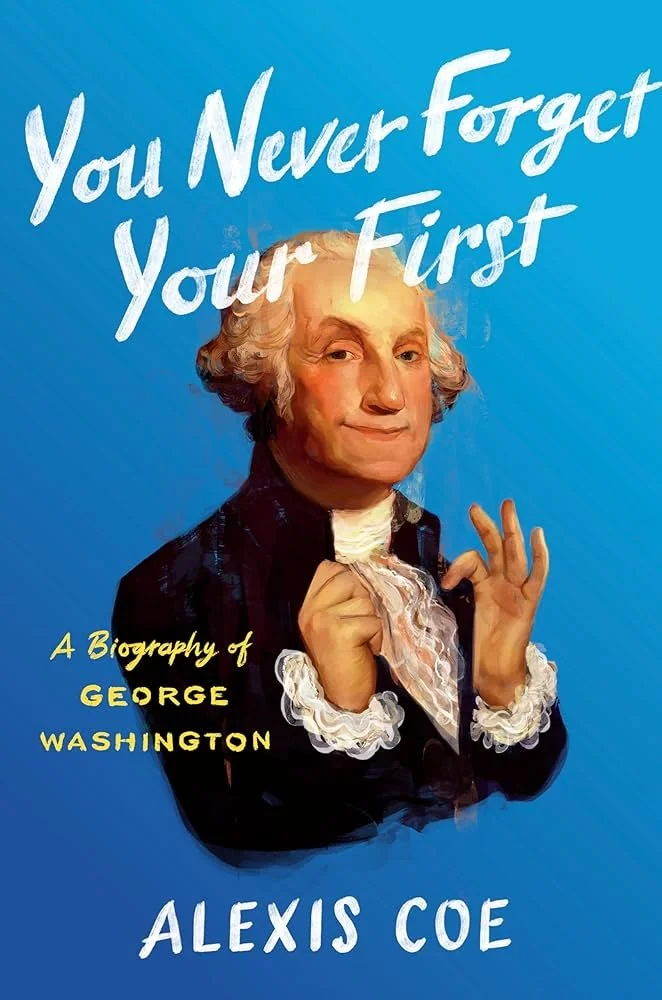
A better understanding of a life can also come from reporting the facts rather than promulgating the myths. A case in point, argues Alexis Coe in You Never Forget Your First: A Biography of George Washington, considers the idea of George Washington as an ideal, a version typically presented by Washington’s biographers who are men. As Coe notes in the preface to her 2020 book, “No woman has written an adult biography of George Washington in more than forty years and no woman historian has written one in far longer” (xxvii), something Coe realizes even as she writes one. She argues as women biographers and historians write about well known subjects, they tend to tell the stories of those in supporting roles, which in turn adds to the better understanding of the major figures.
An example that Coe gives is how Martha Custis Washington is usually portrayed. The lack of children born to George and Martha Washington tends to be blamed upon the widow Martha despite the fact that she had children with her first husband, and “In all likelihood Washington was left sterile from an illness in his youth” (xxxv). Washington’s own mother Mary doesn’t escape such harsh treatment, and she is also often portrayed in standard biographies of her son as a shrew (xxxviii) and “‘illiterate, untidy, and querulous,’ even though we know she was literate, if not especially well read,” Coe explains, adding, “She stuck to the Bible and books about it, and her letters reflect that: Her vocabulary was limited, her prose artless…but if her writing is any indication, she thought mostly in terms of death and survival” (xxxix). This puts things in perspective.
Coe’s points are well taken; to better understand a person—especially a man held in esteem—we need to consider the expectations of the times and the experiences and views of the regular people around him. By allowing Washington to be a man, albeit a man who was instrumental to ensure that the United States of America avoided becoming not just another colony of the British Empire, we too can see how his struggles and foibles make him an even more intriguing and admirable leader, with qualifications, of course. We are troubled knowing he enslaved other humans even as he fought for the liberty of Americans from the British. That dishonorable stand, while too common during the founding of the United States, is juxtaposed by our understanding of how he insisted upon not being seen as the equivalent as a king when so many in the new country wanted him to serve a third term (172). He just wanted to return home to his own family rather than be the father of a new nation.
Coe’s approach offers many insights into the life of Washington that other biographies might not. While we often read about Washington’s prowess or lack thereof on the battlefield, Coe also describes how Washington’s service to his country left his family on their own, at times to their detriment, while he was ensuring the security of the nation. Washington himself yearned to leave this position and burden behind to return to Mount Vernon. These are the sorts of details that often are excised from narratives about our first president.
Again and again Coe delineates the ironies of Washington’s life, including the impacts of George and Martha enslaving people. An example: Coe includes a table entitled “A Family Divided” where she examines the impact of George Washington freeing the people he had enslaved upon his death. Sounds wonderful, right?
However Coe’s focusing on the impacts upon Isaac, an enslaved person who would be freed, according to Washington’s will, not upon Washington’s death but rather his wife Martha’s passing, and Isaac’s wife Kitty, who was a “dower” enslaved person—as were their children and other relatives who were owned by Martha—we see that they were not freed when Washington himself died. They were also not and freed upon Martha’s death but willed to her Custis heirs (204), even as Isaac who had belonged to Washington finally was freed. “They [Isaac and Kitty’s family] went from living on one plantation to five different locations” (205), Coe writes, and seeing the names of these family members, including Kitty’s herself, as they were dispersed, emphasizes this family’s status as chattel, not humans in the eyes of the Custis heirs and of many people of the era. “There is no evidence that they were ever reunited” (205), Coe concludes, a statement that would apply to all of the 150 dower enslaved humans (204) that Martha owned, a small indication of the heartache and suffering they endured.
These 150 otherwise forgotten humans are stark reminders of the complexities and tragedies of the era. While George Washington was a giant among men during his time, Coe reminds us that he also was just a man, a mere human as we all are, full of contradictions. She also shows us that there were many such men, and women, free and enslaved, who make up our pasts. Their stories should also be examined.
By reading accounts of lives of those who lived during the time leading up to the American Revolution, during it, and beyond, we learn not only about those eras but also about ours and our actions in them. Biographers and historians such as Berkin, Lepore, and Coe focus upon everyday people who lived around and among the giants of the times and those people, usually women, whose stories are not always told. These authors also remind us, to expand upon the words of Abigail Adams to her husband, to “Remember the Ladies,” then and now. Better yet, seek them out and meet them on their own terms.