
Part Two: Everyday Life, Work, and Community
By Nancy Bendiner
Nancy is a longtime member of Historic Red Hook and a dedicated volunteer with its Collections Committee. In this two-part article, she explores letters, diaries, and journals preserved in Historic Red Hook’s archives, using the words of past residents to illuminate wartime experiences, family life, work, community, and the changing ways people have communicated across generations. (Find part one here).
Life at Home, Church, School and on the Farm
Letters and diaries in the Historic Red Hook collections preserve many details of everyday life—family relationships, meals, illness, work, churchgoing, and social visits.
“Nov. Tuesday 18th. This day, Mary E. would have been seventeen years old, had she lived. But alas she is gone never more to return. Will she see the everliving now? Her eyes are forever closed to all earthly things and she is lost from our sight. Beloved sister, are you gone forever, no more to return?”

Louisa Mead’s Journal, HRH Collection
“Up in good season and prepared breakfast, which consisted (as usual) of pancakes, very sour, this being usually the case under my administration. The long visages at table I considered a reflection on my system of cookery. Wife continues unwell. Read newspapers, etc., until 3 p.m. with admixture of juvenile squalls, which always temper a married man’s enjoyment, so the cup never runs over. In the p.m., I concocted (though I say it who shouldn’t say it) a most delightful dish of oyster soup.”
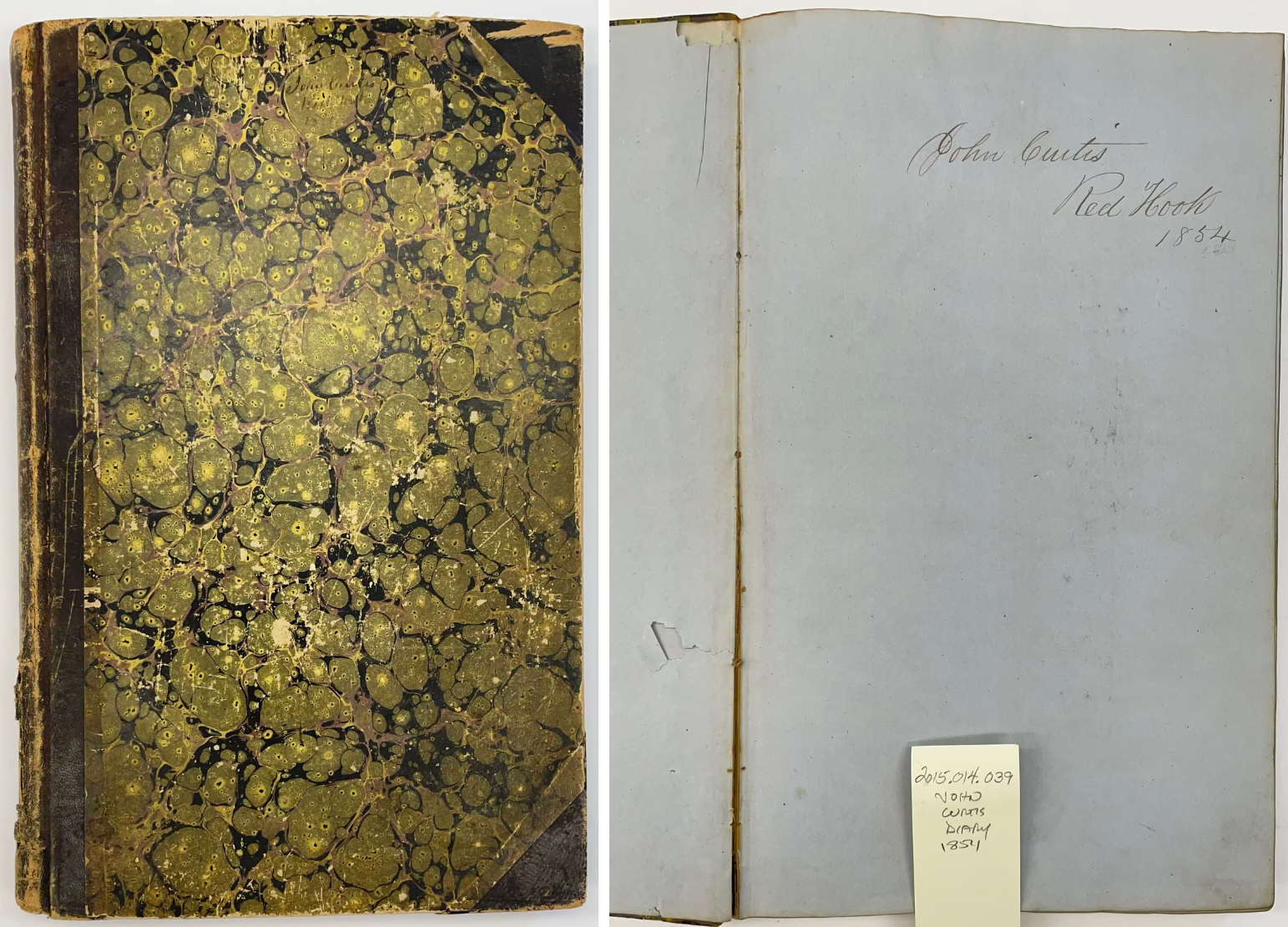
John Curtis’ Diary, HRH Collection
As discussed in Part One, not every life represented in the archives survives in that person’s own words. Jane Cross, a Black woman who worked for the Chanler family, is known here through the recollections of others.
After the passage of New York State’s abolition laws, by 1827 African Americans in the state were legally free workers rather than enslaved laborers, at least officially. Jane Cross, a Black woman, became employed by John Winthrop Chanler. His great-grandson, Wint Aldrich, later recalled that Chanler hired Cross,
“to help care for his innumerable young children when he was first elected to Congress and lived in Washington. She lived and traveled with the family, ending up at Rokeby where she was loved by the orphans and where she died of a heart ailment in the 1880’s.”

Jane Cross
Julius Moul’s 1885 diary records the routines of farm and village life in short, matter-of-fact entries.
“A nice day, went up to Phil Stickles with Frank to look at a Horse. Emma and Frank went to church at night.”
“Fixed place for hogs in barn cellar, went to Barrytown in afternoon after Emma. drove Nellie and Charlie double. sleighing getting thin some places. thaws some. peddler came to stay all night.”
“Made cider, went to corner at night, George Aucock got married. Sim Clark is dead. a nice day. (George S. Aucock and Miss Matie Vosburg, both of Red Hook, married there October. 14, 1885, at bride’s res. by Rev. S.A. Weikert.) (Simeon C. Clark died in Red Hook Village October. 13, 1885, age 68 yrs.). ”
Twentieth-century letters and diaries in the collection range from private worries and social life to gifts, memories, and community traditions.
“My dear Saulpaugh, I have just received a letter from the Captain in which he sends me your letter to him stating that you were soon to go to Vassar for an operation…..I assure you, old man, that I am much in sympathy with you and I hope you have been through the worst and that you are now on the road to a complete and rapid recovery…. Long Island is alright, but you cannot beat the old place and the old ‘boys’ and the old times…”

Envelope from letter to Herbert Saulpaugh, 1912, HRH Collection
“We went to the old museum. Very interesting. Lunch at Reeves, O boy, chocolate pie! Bought organdy for flowers. Made a little bunch. No mail!!!! Hell! Read magazines.”
“Elsie, Grace and I went over across the street to church. I fell off the step and the young minister started to pick me up but I didn’t give him a chance. I didn’t have anything to drink either.
”
“Mother & Dad went to Grandma’s for the day. Mrs. Teator asked me to stay to dinner. At night Agnes, Herman, Helen, Charlie & Leo & I went to the lake. Had a Hot dog roast tres Bonne!! Good time.
”
“Nothing much all day. Went up Upper Red Hook to a dance with Leo in evening. A program dance.”
“Dear Mrs. Teator, You will be interested to know that the shells all reached here safely and that the cabinet is in place, with its contents unpacked. As soon as time permits, I will unpack and count the boxes, and get as (sic) estimate from Osborne as to their value. Thanking you again for the gift of the shells, I remain, Very sincerely yours A.L. Treadwill.”

Studio portrait of William Seward Teator as a young man. Studio is marked below portrait ,HRH Collection
Jane Lewis recalled childhood Christmases in a 1974 letter, including memories of the local schoolhouse:
““I thought you might be interested in my childhood memories of Christmas on the old farm (Whalesback to you of the younger generation). Arrived at the schoolhouse, early comers gathered as close as possible to the pot-bellied coal-burning stove in the middle of the room while those on the outer edge kept on their outdoor wraps and tried to keep their feet warm by wiggling their toes inside shoes and galoshes. Mrs. Blako, who reigned over District No. 9 through most of my school days there, was perhaps a bit less innovative but almost in a class with Henrietta Fraleigh whom some of our younger generation remember gratefully as a superior teacher in a rural school setting. Mrs. Blako had had us all (about 14 or 15 children in all) memorize the portion of Luke’s gospel beginning ‘and there were in the same country shepherds abiding in the fields keeping watch over their flocks by night.’”
She later writes about Christmas morning:
“Church was an essential part of Christmas morning. As most of the students at St. Stephen’s College (later Bard) had gone home for the holidays, the music produced by the local choir may have left something to be desired. I think it was Kirtley who observed that when they sang ‘Hark, the herald angels sing’, all he could hear was Angie Lewis and she didn’t sound particularly angelic…”
She continued in describing how the local community helped to decorate the chapel.
Lectures in Red Hook for the Citizens
John Curtis’s diary also records public lectures that brought broader questions of crime, reform, and civic life to Red Hook audiences.
“Nov. 9, Thursday [1854]: Mr. Gould of Stockport Col. Co. lectured on ‘crime’….a topic which must be met at one time or another. He defined crime as an infringement of the Law of the country, such as burglary, stealing, murder, Vice as injuries inflicted on ourselves and not punishable by Laws.” Sources of crime, he wrote, as “1st Grogshops 2d Brothels 3rd Gambling Houses and Lotteries 4th common jails 5th orphanage(s)….” In describing crime he asserted that the community at large “acted a part in assisting crime indirectly, but surely, and however much we were disgusted with crime and criminals we were accessories, by the course that was pursued. When a person is accused of crime whether guilty or innocent, his reputation is gone, the cry of jail bird pursues him and prevents his getting employment and his only course is crime to prevent starvation.”
“23 Nov. Thursday [1854]: Horace Greeley delivered a lecture on ‘reforms and reformers.’ He made some preliminary remarks on Lectures and Lecturers. Lectures were chiefly useful in reminding us of subjects we were prone to neglect and of exciting thought and action.”
Business and Law
Other letters reveal the practical business of daily life: purchases, debts, property, employment, and disputes.
“My dear husband, Just a while ago our yacht came in and I am sad that these goods were bought. Kornelis Martense is here for his money. He bought a black woman for 55 (pounds) from Meyer in Esopus. She was born there. He has to pay for her in a month so you have to send his money. I sent a note to Salisbury but I do not think we will get it. You always wait so long. When you heard that the price of wheat was going to go up you should have bought it. I am sending herewith Salisbury’s letter. I will have to give him as much money as he wants... Your Honorable Loving Wife.”

Detail of letter, Alida Livingston
In another letter to her husband, Livingston discussed debts and financial obligations:
“My dear husband, I received your happy letter… You must use your money now to pay off your debts in England. Make sure to reach an agreement with Mr. Simpson about Duckles’ debt and maybe they will take off some of the interest and the main sum since we got a lot of damage after the returns we made….Write your creditors to be civil and that you will pay as soon as (the money) comes in.”
She then wrote about her ongoing illness, describing “pain and painful fever and cough” ending her letter “while brother Pieter is there I think you and our friends should end the disagreement you have had about the house you sold...Your honorable Loving Wife.”
More than a century later, letters continued to record the everyday financial arrangements and exchanges of local life.
“Dear Sir: I hope soon to be in the rec. of my pay fore taking census and when I am I will settle with you. When I was in New York I purchased a pair of shovel and tongs and Mrs. Van Ness has concluded to do without them. I beg you will take them in your store and if an opportunity offers to sell them and they can be sold we will take our pay out of the store. They cost (indecipherable); if you can without inconvenience you will greatly oblige me by letting me put two wagons in your building south of the store. I am dear sir your Jacob Van Ness.
”
“Febery 21 1847, Dear Sir. I take the liberty of riten to you again. I rote to you in anser to your sekend letter and I have been waten for an anser ever sence I hunder stand that Mr crouger as got the factury into his owne hands and is rented it till this summer and if that be the case I hope acorden to the informacion I have allways receved from you will be cared into efect I have allways placed my confidence in you and Mr rouley thinken that if I did my duty a cordin to your instructions that you would not see me ronged hout of my rites I think it will be a very hard case if I should lose that property in the factury or the money I pade for it I ham now left after worken four years in dept and this panes me very much for ther is not a thing on erth that I dislike wors then for any one to have to ask me for money and I cannot pay them. “ [signed] George Graham to Mr.J W Elsefer, attorney, lower Redhook villeg, dutches County.
”
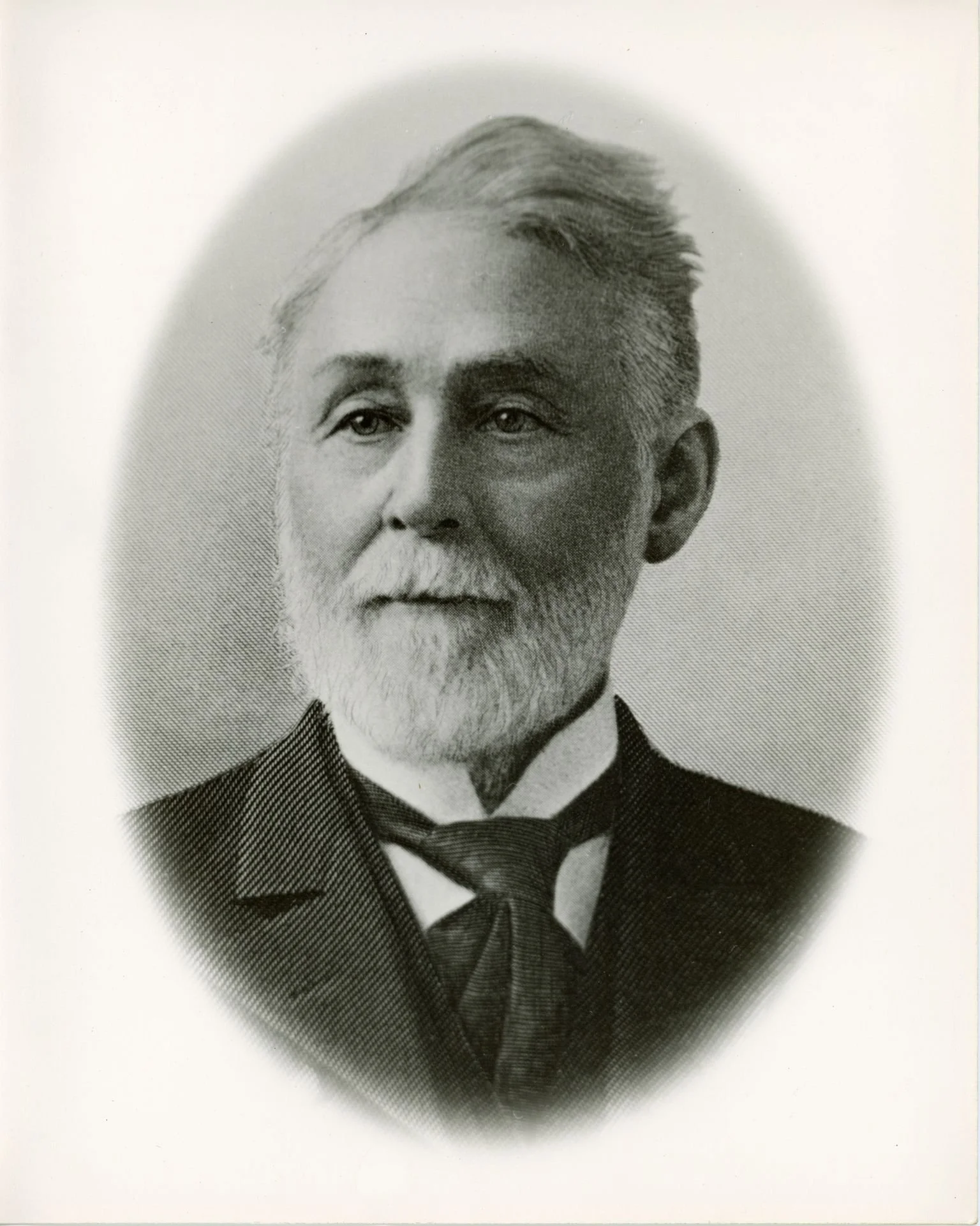
Jacob Elseffer, HRH Collection

A business letter to Elseffer, 1884, HRH Collection
In an 1897 letter to American Gardening, Frank Lown remembered Alexander Gilson:
“Aschyranthus Gilsonii, which you say was raised by a colored gardener. When I was a child I lived in Barrytown, in this county, and I well remember Alexander Gilson, who was then the gardener on what was known as the ‘Barton place’, a couple of miles north of where we lived. He was a colored man, but he very justly earned and received the cordial liking and respect of the entire community. He was an accomplished gardener, and died but a few years ago, and I am rejoiced to know that now the name of old ‘Alexander’- and no one knew him by aught else- has been perpetuated by the plant.”

Aschyranthus Gilsonii, Courtesy of Bard College
Gilson at one point operated a nursery business and was head gardener at Montgomery Place. According to historian Myra Armstead, Gilson was most likely born into slavery before statewide abolition and was purchased by Janet Montgomery. (Read more about Gilson here.)
Decades later, correspondence continued to record the uncertainties of work and agricultural life in Red Hook.
“George still hasn’t been able to get a job. He had worked the Fall before last hauling apples for cider, but last Spring we had several late frosts and spoiled most all the apples so he did not get much work and sat the same time George had to move his whole farm alone so did not get much time to haul apples. Just recently he had 1/2 days work 3 or 4 times trucking cider apples but could not as yet get anything steady. If we have a good apple year this year he will make an arrangement with you to pay for the bull.”
Red Hook and Rhinebeck
Letters can also document the workings of local government, as in this 1914 exchange over the boundary between Red Hook and Rhinebeck.
In response to a letter from Mark DuBois, an assemblyman from Poughkeepsie, about a bill regarding the town line between Red Hook and Rhinebeck, the surveyor Frank Teal responded:
“I thank you very much for your letter….containing references to the County law, concerning the Red Hook-Rhinebeck town line. As I understand it, the bill drafting department is holding up our proposed amendment on account of the fact that certain powers related to such matters have been delegated to the board of Supervisors…Personally I cannot understand why we cannot amend any law in the statute books of New York. However I am not a lawyer….At the instigation of the assessors I was employed by the Town Board of both towns last year to survey and reestablish this line.”
He goes on to note that the original line was established in 1812 and there is material he wants read into the original law.
Final Thoughts: Yesterday and Today

Woman Writing a Letter, c. 1655, painting by Gerard ter Borch, The Frick Collection.
As I explored our HRH holdings, the differences between how we receive information and communicate today and how people did so in the past were striking. We have seen the transition- if not revolution- away from reliance on paper letters, the telephone, and even television. We rely on the internet, texts, and an explosion of communication platforms, which now include social media such as Instagram, Facebook, Reddit, and Snapchat. Stories and messages can be rolled out in bits and pieces, even in real time- we may “know” it even before the information is passed along, even before the body is declared dead. The choice to text can shave off all but the essential information.
One loss compared to the past is the element of anticipation when sending or opening paper letters, especially before the arrival of the telephone. Letters on paper held in many cases great importance. Would a letter be received and when? When would a response arrive? Many portraits from the 18th and 19th centuries picture a person in the process of writing or receiving a letter, which suggests artists found such a subject important during those times.
Perhaps the senders’ or receivers’ emotions were heightened by knowing that letters could get lost in the mail and that anyone could potentially read them. If not destroyed, letters on paper could be preserved with no option to correct or explain whatever was said. Today, emails and social media posts—even if meant for an audience of one person or a few- can be forwarded and viewed and may follow their writers, perhaps forever.
It is likely that our current Red Hook community, as well as most of the world, now prefers to use email or text messages rather than the written letter to reach out in writing to others. The extent to which diaries and journals are still written, perhaps in secret, remains unknown, though there is a current explosion in the publication of personal memoirs and interest in them. It is up to the reader of this article to consider what we might miss—or gain— in terms of human communication and closeness as we move on in time and as we embrace new ways to reach each other.
Hannah and other families at home waited weeks to know if their loved ones were alive or dead, and those on the battlefield craved the long-delayed news from home, with many details to learn after such long silences. As we see in the Historic Red Hook Archives, though, these letters, journals and diaries were essential to the fabric of the Red Hook community in many ways and played a critical role in carrying on family and community life.
Nancy Bendiner
Volunteer, Historic Red Hook Collections Committee
Addendum:
*The paper files also include many letters from the public, often seeking further information about their Red Hook ancestors. These letters can themselves serve as a valuable source of information especially for filling gaps and provide leads about family history. They are usually available in the genealogy files under individual surnames.
**An oral history project at Historic Red Hook has resulted in interviews with local residents, some of which are posted on the Historic Red Hook website.
Acknowledgments
Thank you to Claudine Klose for reading this article and sharing her invaluable suggestions; to Elisabeth Tatum for her additions to my sources; to Jim Haskin for his explanations about digitization of our collections; to Wint Aldrich whose additions to our Archives have been very helpful in my research; and to Historic Red Hook’s dedicated volunteers who endlessly work to digitize our holdings and remain available to help the public with their inquiries.
Sources
HRH genealogy files, Archives Room at the Elmendorph Inn, under surnames.
Donated collections, in both Archives Room and Story Studio—a full list of collections can be obtained on request. There are approximately 131 collections.
Volumes in Story Studio on bookshelves about specific Red Hook families, including some diaries.
Carr, Claire O’Neill, “A Brief History of Red Hook,” The Wise Family Trust in cooperation with The Egbert Benson Historical Society of Red Hook (now Historic Red Hook), 2001, available for sale at Historic Red Hook’s Story Studio.
Hermans, Sarah K., “In the Cemetery Next Door,” June, 2019.
Digitized records, Historic Red Hook website.
Leonard, Roger M., “Upper Red Hook, An American Crossroad”, 2012, available for sale at Historic Red Hook’s Story Studio.
Myra B. Young Armstead, “From Property to Proprietor: The Exceptional Journey of Alexander Gilson”, 2019.
Further Sources and Background Information
Fraleigh, Thomas. Letter to wife Hannah, July 28, 1863, written soon after the Battle of Gettysburg. Warrenton Junction, Va., transcribed by Janis L. Esty from the original. Fraleigh genealogy file.
Swart, James, likely referred to in 1790 diary of Paolo Andreani as Giacomo Swartz who was the son of Thomas Swart who lived in Upper Red Hook. From “Along the Hudson and Mohawk- the 1790 Journey of Count Paulo Andreani,” Translated and edited by Cesare Marino and Karim M. Tiro, University of Pennsylvania Press, 2006, clipping provided by Wint Aldrich. Swart genealogy file, HRH and HRH Digital Collections. A question remains about whether the “tavern” referred to the Elmendorph, Thomas’ Tavern, or Pink’s Tavern.
Benson, Egbert. Letter to John Jay, March 19, 1777 in “John Jay: The Making of a Revolutionary, Unpublished Papers 1745-1780”. Debating Society Papers, New York Historical Society, 1975, as quoted in Robert Ernst, “State History at New Paltz” June 1996, located in HRH Archives. Egbert Benson was considered by some an unsung hero of the Revolution and served in many roles. When he wrote this letter to John Jay, he was a member of the Committee for Detecting and Defeating Conspiracies, and was soon to become New York State’s first Attorney General. The Committee’s role included ordering the arrest of persons suspected of aiding or planning to aid the enemy as well as to decide whether to confine, deport, or release these persons on parole. Citizens were requested to sign an Oath of Allegiance.
Entry by unknown diarist about the effort to have citizens sign the Oath of Allegiance, May 18, 1777. Historic Red Hook in the more distant past received donations or at times made photocopies where sources were not identified. If the source of this diary is recognized, please let us know. Also cited here are other entries from this diarist, now in Revolution file in Story Studio.
Washington, George, Oct. 25, 1777 letter to Major General Israel Putnam, thanking him for his Oct. 20 letter sent from Red Hook and reporting to Washington the defeat of Continental forces on October 7, 1777 at Saratoga. See Carr, chapter 5 pp. 25-26, about Burgoyne surrender. Major General Horatio Gates had not informed Washington of the British Defeat in this key battle. The October 20 letter from Putnam to Washington appears to have been lost and never transcribed. Quote in “Notes”, referring to Writings of George Washington, Claire O’Neill Carr. Also per Wint Aldrich note to Egbert Benson Historical Society, March 2000. See file on the Revolution, Story Studio.
Livingston, John, 1778 letters to Robert Livingston, in “The Livingston Legacy: Robert R. Livingston and the American Revolution,” Lorna Skaaren, from symposium sponsored by the Friends of Clermont, Bard College/Hudson Valley Studies Program and New York State Office of Parks, Recreation, & Historic Preservation, Taconic Region, June 6-7, 1986. John R. Livingston was a son of Margaret Beekman and Judge Robert Livingston, and the brother of Robert R. Livingston. His family resided at Livingston Manor; he was a merchant who served briefly with the Manor Militia and held an army commission to purchase army supplies. He founded a gun powder mill in 1776 in Dutchess County which was guarded by soldiers “after local Tories stole seven hundred pounds of the powder.”(Skaaren, Journals of the Provincial Congress, Vol 1, p. 551).
Jay, John. 1780 letter from England to Egbert Benson, his close friend. Letter as quoted in paper by John Gordon II for the U.S. Capitol Historical Society, from the Public
Papers of John Jay. Jay was then in Spain on a diplomatic mission, later assisted in getting New York to ratify the Federal Constitution. Benson spent some of his childhood in Red Hook reportedly visiting his aunt Tryntjie Hoffman who lived in Tivoli. He likely lived in Tivoli in his early adulthood, and later served as a lawyer in the Red Hook area, settling in Red Hook in 1772. (Robert Ernst, Adelphi University, 1996, “Egbert Benson, Forgotten Statesman of Revolutionary New York”). Benson went on to serve in the State Assembly from Dutchess County (1777-1781), was the first Attorney General of New York State, was later in Congress and a member of the Supreme Court of the United States. For further background see Nancy Bendiner, Historic Red Hook Newsletter, 2024, “Egbert Benson: Found and Not Forgotten” Some believe that Benson was willing to compromise on the issue of slavery in order to achieve a strong Federal government but that privately he was against slavery.
Clinton, Brigadier General James. May 7, 1781, letter to George Washington to report the flour in the Mills and to request Washington to approve the flour requisition. Carr, p 24 and copy of letter in HRH Archives subject file “Revolutionary Material” with note from Wint Aldrich; also, see Carr, “Notes”.
Washington, George, May 14, 1781 letter to Brigadier General Clinton as a thank-you for his May 7 letter and for obtaining bread for the troops, Carr “Notes” and p. 24.
Armstrong, Col. John. Jan 25, 1813. Letter to his longtime political ally and friend in Albany, Judge Ambrose Spencer, it is believed written from Red Hook. Original in the Rokeby archives, copy in HRH Armstrong genealogy file in booklet “War of 1812- Gen. John Armstrong”.
Civil War letters include those from Philip E. Strobel and Evert Myers. The Red Hook Journal published an ongoing series of letters from soldiers while the war was going on during the 1860s.
Frank Huger’s letter about “Warren” who died during the Civil War. Warren served in both the 12th New York Infantry and the 14th Army regiment. He was the third child of William Chamberlain, who purchased the well-known estate in Red Hook, “Maizeland”. Losee genealogy file, Historic Red Hook, “The Chamberlains of Red Hook and New York City, 1800-1950, by Bronson W. Chanler, 2001.
Funk, Peter W., “A Civil War Soldier’s Diary.” Transcribed and Researched by Margaret E. Herrick, see HRH 2018.008.010. Funk was a farmer, the eldest child of his father Alexander who lived in Red Hook. Diary entries also available in Losee Genealogy file, “Red Hook in the Civil War”. Funk served in Co. F, 150th NY Volunteers, that recruited mainly from Poughkeepsie, Rhinebeck, Red Hook and Milan. This regiment was part of the 2nd brigade, 1st division, 12th Corps which fought at Gettysburg, its first battle, “losing 45 killed, wounded and missing.” (The Terrible Price of War: Pvt. Virgil Group, Co. F, 150th). Over the following months, this group engaged in more battles with loss of life.
1910, Drill notification from E. Edward Pitcher to Herbert Saulpaugh, both members of well-known Red Hook families. Saulpaugh file, HRH, Box 1998, Multi Collections.
During World War II, “V-Mail (Victory Mail) became a streamlined way for U.S. troops abroad to send letters home. The mail was photographed and reduced onto microfilm reels which were shipped and then printed out abroad on lightweight paper in miniature size. Some soldiers complained that they could not write as much as they needed using V-Mail. See Wikipedia entry on V-Mail.