
Part One: War and a Changing Nation
By Nancy Bendiner
Nancy is a longtime member of Historic Red Hook and a dedicated volunteer with its Collections Committee. In this two-part article, she explores letters, diaries, and journals preserved in Historic Red Hook’s archives, using the words of past residents to illuminate wartime experiences, family life, work, community, and the changing ways people have communicated across generations.
On July 28, 1863, Thomas Fraleigh of Red Hook wrote the following letter to his wife Hannah:
“Dear Wife,
You must be very anxious by this time to here [sic] from me as to my welfare. We are now after a long series of marches in which we’ve passed through Maryland and Pennsylvania and are now in Virginia how different the soil is. Here everything wears a poverty stricken aspect farms——-(indecipherable) house built of logs and with large stone chimneys on the outside. The homes are small and most all of the houses have been burnt and riddled by the Rebels.”
He went on to describe the illnesses of his regiment possibly due to “the last week we’ve had awful water muddy and scarce fit for a horse to drink.”
“Yesterday we got our first letters from home in 5 weeks. I was disappointed in not getting any. The other boys got one and it seemed to do them so much good. I saw Art Palmatier he’s alive yet there is about 90 of his regiment left, he has been all through the last fight but still came out safe, our boys fared pretty good, we had only 7 killed and 2 wounded no Red Hook boys were hurt some from Rhinebeck were...”
He then went on to describe the recent battles including Vicksburg (“31,000 prisoners”) and Port Hudson and near the end “I send my love to you and the children. We’ve not been paid off as yet.”
We know little about how the letter was delivered to Hannah, perhaps by a soldier on horseback carrying bags of mail. Nor do we know how long it took to arrive. I chose the preceding example to share with you because it highlights the value letters could provide, especially in the days before the internet, telephones, and other modern forms of communication, when people were located far from home. This was especially meaningful when soldiers marched at death’s door.
A Journey Through the Archives
Within the HRH Archives, I recently traveled through time from the 18th through the 20th centuries. I searched for letters, diaries and journals that I hoped could bring me closer to the people and history of Red Hook than what could be found in textbooks and cold narratives of events. Some readers may not recognize all the names mentioned, and some names are locally well-known. Perhaps these written items could offer a glimpse of details not available elsewhere about what was really going on behind the scenes. There is no doubt that letters, diaries and journals could provide an outlet to express thoughts that writers felt unable to reveal or uncomfortable revealing elsewhere.
My plan is not to provide a comprehensive view of history, but to bring you along with me as Red Hook citizens reveal their stories with their pens.
What to Know About the Historic Red Hook Archives
In two buildings, the StoryStudio at 5 Cherry Street and on the second floor of the historic Elmendorph Inn, Historic Red Hook maintains archives and paper collections that reveal for us the history of Red Hook since the 18th century. The holdings include original documents- some of great fragility- as well as photocopies relevant to Red Hook history. We also have many vintage photographs plus assorted objects. Documents focus on Red Hook, though may at times be part of larger works or drawn from holdings of historical societies and libraries elsewhere. Most of these items came to us through donations over many years.
Some material remains within collections, in the form in which it was donated, often under an individual name such as the “William S. Teator” or “Frank Teal” collections. A collection may include many different categories of items, such as documents, photos, letters, etc. Some of those items may be duplicated or dispersed into additional subject files. Within a collection there are often items which refer to additional families. Historic Red Hook also holds a large genealogy collection.
Our Historic Red Hook website provides an opportunity to view hundreds of digitized materials, some of which will be noted here. For those interested in pursuing a subject further, the Collections Committee is available to help in person at the Archives—in the Story Studio Tuesdays and Fridays and the First Saturday of every month. Dedicated volunteers continue to digitize our holdings and organize our genealogy files so information is more readily available to the public.
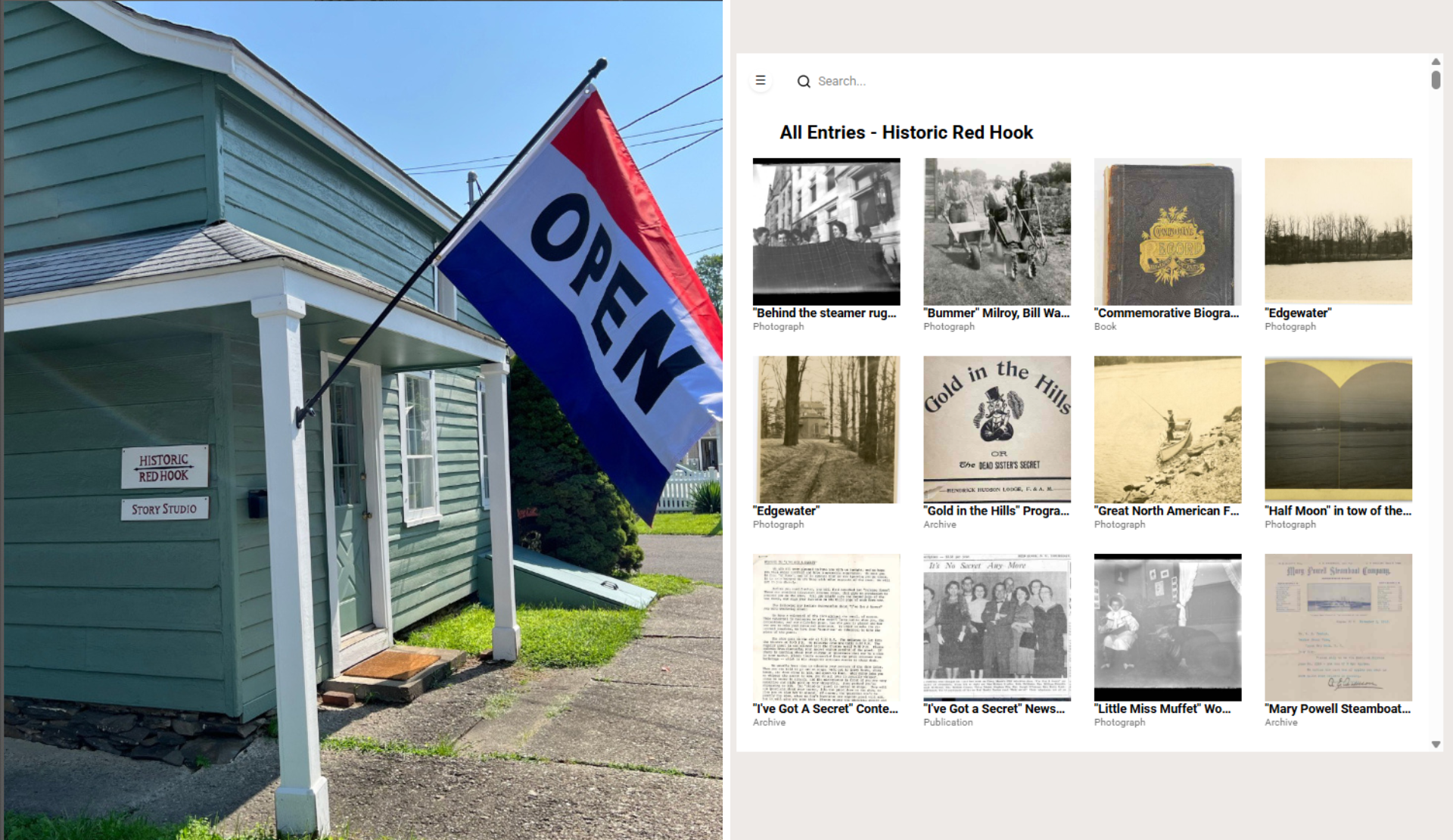
You can visit the StoryStudio at 5 Cherry Street or explore all of our digitized collections at www.historicredhook.org/collections.
Who Wrote Letters, Journals, and Diaries?
One wonders who was most likely to write these communications in the first place. Why did some writings survive but not others?
My impression is that the writings of those locals with education and perhaps economic, social, or political standing in Red Hook were more likely to be written in the first place and then preserved. Perhaps a woman with servants would have more time to write in her diary. Documents, either originals or copies, might survive longer if connected to a war or important political event. For those documents that did survive, some survived by luck alone, or perhaps preserved in a family or even a business archive, safe from the destruction of time and the elements.
There are some who believe that in America during the 18th and 19th centuries, the so-called common man could sometimes read, but many were less able to write, yet we do find letters written by regular folks without titles or fortunes. Women, especially during periods of war or when men were at sea, assumed many business and farm responsibilities usually reserved for their husbands, and this was sometimes reflected in their letters or diaries.
As you will see here, there are documents or accounts in the Historic Red Hook Archives that mention Red Hook’s Black citizens, sometimes through the words of their employers after slavery was officially ended in this state in 1827. Written documentation in the Archives about their presence relies mainly on census and church records, both before and after the end of slavery, and observations by others. At times, names do not have surnames. At St. John’s Reformed Church, for example, members were identified by race at least until 1900 and during slavery, their master was sometimes listed. I am still seeking letters and journals, for the Archives, in which our Black citizens wrote about themselves. There are journals written by African Americans elsewhere in the country. Some African Americans in Red Hook received attention for their more obvious and documented contributions, such as Alexander Gilson, a well-known gardener, nurseryman and landowner. A Black man who lived in Red Hook Village (as a renter, not an owner), Ellsworth Jackson, received some written attention, described as “an old and respected colored resident” in his 1917 obituary in a local newspaper.
Let’s explore now some of the themes discovered in letters, journals, and diaries. At times, the themes stand alone; at others they are combined with other subjects within the same document. Spelling is presented here as in the originals.
As you read, you can refer to “Further Source and Background Information” at the end of this article to learn more about those who speak to us in their writings here, as well as about their times
An Early Observer of Red Hook (soon after the Revolution)
“This day we crossed a country well cultivated, without however having a place to make any observations, and along the way we found several new settlements. In the evening we took lodging in the Village of Red Hook in a passable tavern kept by Giacomo Swartz. This village is at a distance of twenty five miles from Poughkeepsie.” ”
It is likely that the Giacomo Swartz mentioned was Red Hook resident James Swart.
Wartime - the Revolutionary War
“..and may not the Enemy….receive a considerable accession to Strength before we are aware of it? These people have taken a decisive part and consequently will become more desperate. Can they not by Means of Emissaries do more Mischief while out of Reach than when at Home in your Power and under Fear of being punished if detected.”
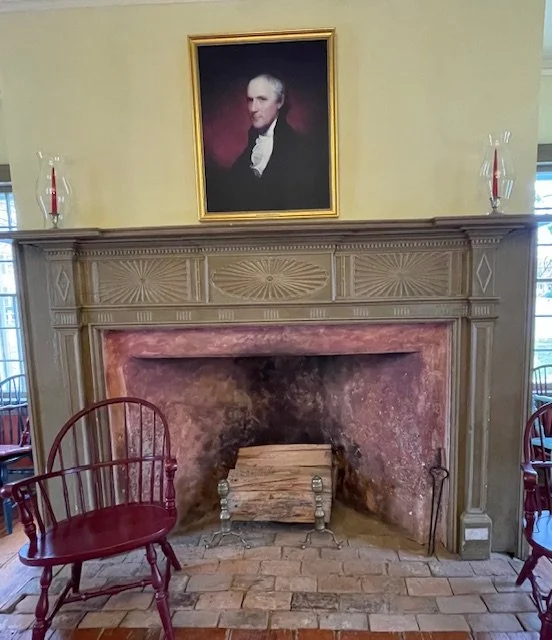
Egbert Benson’s Portrait in the Elmendorph Inn
“…Robt. Benson at the Church Door gave a printed Ordinance of the Convention of 10 May offering Pardon to all who will come out from NY and all others & take an Oath of allegiance by the 1st July….”A School Master of the Manor of L. at Red Hook Church Door, taken up as a Stranger. The Oath of Allegiance tendered- He refused and was committed- PRL says there is no Committee now in this Colony but adds that Orders are out to take up all unknown Persons & put them to the Oath.- Every Man acts it seems as he pleases before the new Committees are formed.”
“…the first authentic intelligence I received of the affair…I have not received a single line from General Gates.”
“[People] are a little frightened. ”
“I am much chagrined that nothing is done to raise more troops for the ensuing Campagne..(and) afraid that Gen. Washington will be obliged to retreat as soon as the Enemy come out in the spring, which will be attended with disagreeable consequences, as the Militia will be backward in turning out when that is the case.”
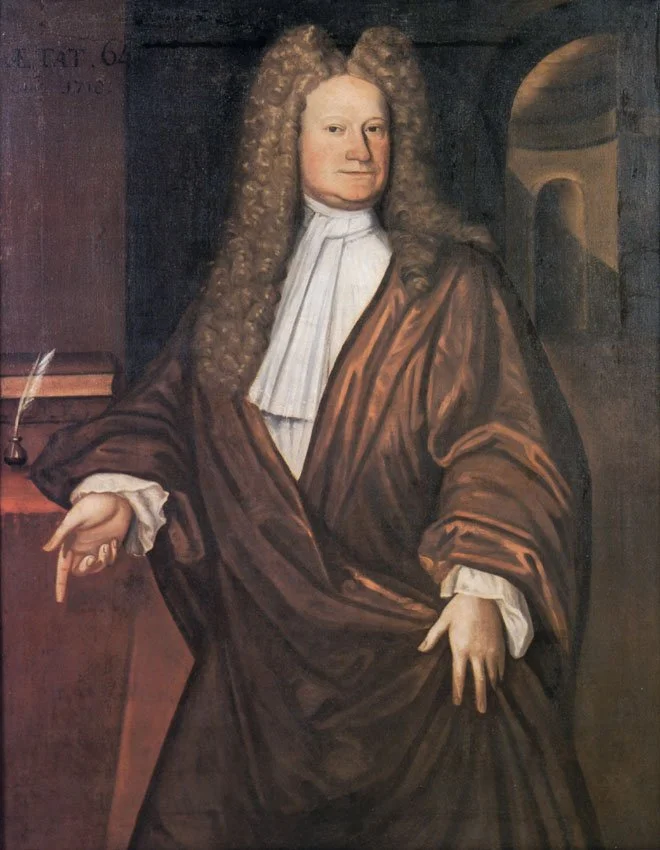
Portrait of Robert Livingston, from Wikipedia
“Peter tells me that he has got off 22 Men as far as Thomas’s Tavern at Red Hook under the care of one Harmonse a Deputy to Lawrence one of Mr. Clinton’s Comrs. for forwarding the Reinforcements.”
“Last week a party of Gates’s Men repaired the Road from Fish Kill to Red Hook- This seems to indicate that he means to follow the British Troops if they ascend the River.”
“20 or 30 waggons ordered yesterday from Red Hook to Fish Kill the British Army being on the March this way...”
“The State of New York is never out of my mind nor heart….An excellent law might be made out of the Pennsylvania one for the gradual emancipation of slavery. Till America comes into this measure, her prayers to Heaven for liberty will be impious. This is a strong expression but it is just. Were I in your legislature, I would prepare a bill for the purpose with great care, and I would never leave moving it till it became a law or I ceased to be a member...
”
“I have been informed that there is a Quantity of Flour now lying in the Mills, in the Vicinity of Red-hook & the lower Manner; Necessity obliged me to request its being forwarded on to this place, and to intreat your Excellency’s Sanction to the Requisition… [signed] I have the Honor to be Your Excellency’s most obedient James Clinton.”

George Washington wrote to Brigadier General Clinton, May 14, 1781, thanking him for his May 7 letter and for ‘“obtaining bread for the troops, in their distress, by ordering up the flour from the (Red Hook) mills.” May 14, 1781.
War of 1812
“…The office to which I am destined is full of drudgery ad environed periods. If the results of its management be fortunate, there will be little praise, and if unfortunate, extreme censure. Tho’ I like reputation, and would do much & hazard much to deserve it, I do not under present circumstances think the War office the road to it. I have to execute other men’s plans and fight with other men’s weapons...
”
The Civil War
“The other day while at the Fort (Fort Murphy) I met Evert Myers, a friend to the Journal; he was with a surveying party, he was very much surprised to see Barringer, Kipp and myself, he said he had no idea of seeing us in this part of the country, and thought some more Red Hook boys ought to have the pluck to come out here.. I think he is very sensible for I am of the same opinion. Oh, if I was only home a little while couldn’t I pick out a nice party to come and see how they would like to be soldiers, to eat dry bread and boiled pork with their fingers and have the ground for a table, a chair and bed, and when night came to roll themselves up in a blanket and lie down on SUCH a comfortable bed with a cartridge box for a pillow. Come and try it boys, it is nothing after you get used to it, after you try it no longer than I have, you will surely say with me, who wouldn’t be a soldier, rather than see my country go to ruin?”
“I saw in the Journal a week or two since that there we’re some 17 Red Hook boys in the N.J. 7th; the NY 32nd can beat that- we have 23; ...while we labor hard to establish right and put down oppression I hope we may not so long as we do not complain, hear complaint at home.”
“About 9 o’clock, just as I was sitting down to supper, we were all surprised by a tremendous yell very near us. One of our party with me said there must be good news, yes, said I, the rebels are coming, when the carbines commenced cracking and sending forth their deadly missals in every direction. All immediately rushed out of the tent, some without coats, and some without caps, in order to seek a place of safety. A terrible shower was now in progress, and the quick succession of terrific thunder and lighting, made the night one of the most terrible I have ever witnessed.”
“...I hope that mine is not the painful task to inform you that Warren was certainly killed in the engagement of 30th August….Major Taylor, of General Lee’s staff, told me he saw Warren mortally wounded and endeavored to make him as comfortable as possible and before leaving placed him in charge of one of your surgeons. A short time before he died he gave to a Texas soldier a letter he had written the day previously (to his older brother, William L Chamberlain), requesting him to write a few (last) lines, which he dictated, simply saying he was severely wounded and sending a farewell to you all. The old Texan promised to send the letter, which I’ve no doubt he has done.”
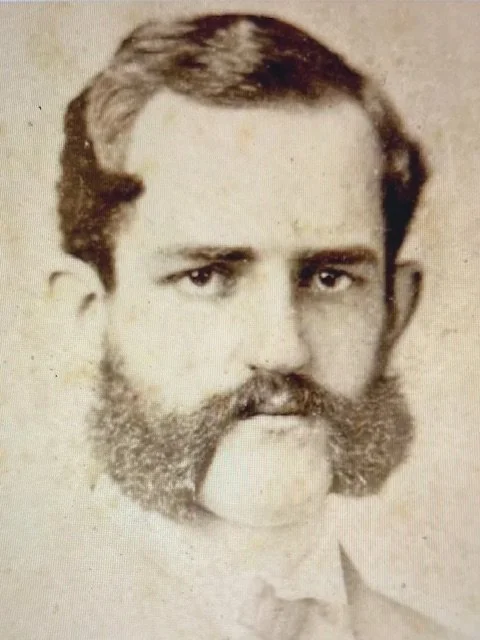
Warren W. Chamberlain, a Civil War soldier
“...On the 21st, Company F was sent to the Newton University Hospital in the eastern part of the City (Baltimore) to do guard duty. There were about 250 sick and wounded soldiers in it at this time, who had left their homes to fight for their country and who were soon to be sent back to their homes again, cripples for life at the hands of those who were striving to dethrone the best government that ever existed. And how many others are there who will never see home to clasp in their arms their loving ones, who imagined he was leaving them for only a short time. Such scenes and thoughts will make a soldier sell his life as dearly as possible, and use his last strength in hurling death and defiance at his foes. ”
“I was invited to help eat a turkey from Red Hook, my native place, which I enjoyed very much.”
“There was a little firing in the morning and about noon we heard the rebels had left. Our loss was 8 killed and 40 wounded. About 3 p.m. we started in pursuit…went 10 miles and camped for the night.
”
The World Wars
“Sir: The attached slip is the number of the paragraphs in your drill regulations to be studied in preparation for field day on Saturday. Please study the (sic) carefully, and be thoroughly efficient in them. Respectfully, E. Edward Pitcher, First Lieutenant and Adjutant, Headquarters. Blithewood Light Infantry, Oct. 5, 1910.”
“Hello, Herbert and Walter, well I am a long way from home, I am somewhere in England. How is everything in Red Hook? I suppose the old town is very dead. I sure miss it. It is very nice over here but I like the old U.S.A. best...
”
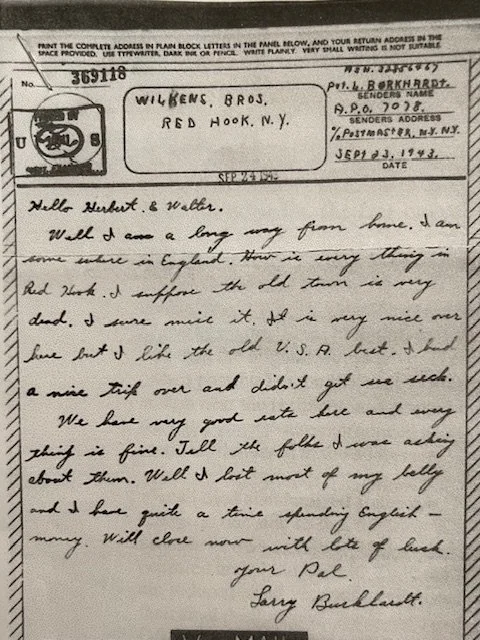
V-Mail from Larry Burkhardt
In Part Two (coming soon) Nancy Bendiner continues her journey through letters and diaries documenting everyday life, family, work, and community in Red Hook.
Acknowledgments
Thank you to Claudine Klose for reading this article and sharing her invaluable suggestions; to Elisabeth Tatum for her additions to my sources; to Jim Haskin for his explanations about digitization of our collections; to Wint Aldrich whose additions to our Archives have been very helpful in my research; and to Historic Red Hook’s dedicated volunteers who endlessly work to digitize our holdings and remain available to help the public with their inquiries.
Sources
HRH genealogy files, Archives Room at the Elmendorph Inn, under surnames.
Donated collections, in both Archives Room and Story Studio—a full list of collections can be obtained on request. There are approximately 131 collections.
Volumes in Story Studio on bookshelves about specific Red Hook families, including some diaries.
Carr, Claire O’Neill, “A Brief History of Red Hook,” The Wise Family Trust in cooperation with The Egbert Benson Historical Society of Red Hook (now Historic Red Hook), 2001, available for sale at Historic Red Hook’s Story Studio.
Hermans, Sarah K., “In the Cemetery Next Door,” June, 2019.
Digitized records, Historic Red Hook website.
Leonard, Roger M., “Upper Red Hook, An American Crossroad”, 2012, available for sale at Historic Red Hook’s Story Studio.
Myra B. Young Armstead, “From Property to Proprietor: The Exceptional Journey of Alexander Gilson”, 2019.
Further Sources and Background Information
Fraleigh, Thomas. Letter to wife Hannah, July 28, 1863, written soon after the Battle of Gettysburg. Warrenton Junction, Va., transcribed by Janis L. Esty from the original. Fraleigh genealogy file.
Swart, James, likely referred to in 1790 diary of Paolo Andreani as Giacomo Swartz who was the son of Thomas Swart who lived in Upper Red Hook. From “Along the Hudson and Mohawk- the 1790 Journey of Count Paulo Andreani,” Translated and edited by Cesare Marino and Karim M. Tiro, University of Pennsylvania Press, 2006, clipping provided by Wint Aldrich. Swart genealogy file, HRH and HRH Digital Collections. A question remains about whether the “tavern” referred to the Elmendorph, Thomas’ Tavern, or Pink’s Tavern.
Benson, Egbert. Letter to John Jay, March 19, 1777 in “John Jay: The Making of a Revolutionary, Unpublished Papers 1745-1780”. Debating Society Papers, New York Historical Society, 1975, as quoted in Robert Ernst, “State History at New Paltz” June 1996, located in HRH Archives. Egbert Benson was considered by some an unsung hero of the Revolution and served in many roles. When he wrote this letter to John Jay, he was a member of the Committee for Detecting and Defeating Conspiracies, and was soon to become New York State’s first Attorney General. The Committee’s role included ordering the arrest of persons suspected of aiding or planning to aid the enemy as well as to decide whether to confine, deport, or release these persons on parole. Citizens were requested to sign an Oath of Allegiance.
Entry by unknown diarist about the effort to have citizens sign the Oath of Allegiance, May 18, 1777. Historic Red Hook in the more distant past received donations or at times made photocopies where sources were not identified. If the source of this diary is recognized, please let us know. Also cited here are other entries from this diarist, now in Revolution file in Story Studio.
Washington, George, Oct. 25, 1777 letter to Major General Israel Putnam, thanking him for his Oct. 20 letter sent from Red Hook and reporting to Washington the defeat of Continental forces on October 7, 1777 at Saratoga. See Carr, chapter 5 pp. 25-26, about Burgoyne surrender. Major General Horatio Gates had not informed Washington of the British Defeat in this key battle. The October 20 letter from Putnam to Washington appears to have been lost and never transcribed. Quote in “Notes”, referring to Writings of George Washington, Claire O’Neill Carr. Also per Wint Aldrich note to Egbert Benson Historical Society, March 2000. See file on the Revolution, Story Studio.
Livingston, John, 1778 letters to Robert Livingston, in “The Livingston Legacy: Robert R. Livingston and the American Revolution,” Lorna Skaaren, from symposium sponsored by the Friends of Clermont, Bard College/Hudson Valley Studies Program and New York State Office of Parks, Recreation, & Historic Preservation, Taconic Region, June 6-7, 1986. John R. Livingston was a son of Margaret Beekman and Judge Robert Livingston, and the brother of Robert R. Livingston. His family resided at Livingston Manor; he was a merchant who served briefly with the Manor Militia and held an army commission to purchase army supplies. He founded a gun powder mill in 1776 in Dutchess County which was guarded by soldiers “after local Tories stole seven hundred pounds of the powder.”(Skaaren, Journals of the Provincial Congress, Vol 1, p. 551).
Jay, John. 1780 letter from England to Egbert Benson, his close friend. Letter as quoted in paper by John Gordon II for the U.S. Capitol Historical Society, from the Public
Papers of John Jay. Jay was then in Spain on a diplomatic mission, later assisted in getting New York to ratify the Federal Constitution. Benson spent some of his childhood in Red Hook reportedly visiting his aunt Tryntjie Hoffman who lived in Tivoli. He likely lived in Tivoli in his early adulthood, and later served as a lawyer in the Red Hook area, settling in Red Hook in 1772. (Robert Ernst, Adelphi University, 1996, “Egbert Benson, Forgotten Statesman of Revolutionary New York”). Benson went on to serve in the State Assembly from Dutchess County (1777-1781), was the first Attorney General of New York State, was later in Congress and a member of the Supreme Court of the United States. For further background see Nancy Bendiner, Historic Red Hook Newsletter, 2024, “Egbert Benson: Found and Not Forgotten” Some believe that Benson was willing to compromise on the issue of slavery in order to achieve a strong Federal government but that privately he was against slavery.
Clinton, Brigadier General James. May 7, 1781, letter to George Washington to report the flour in the Mills and to request Washington to approve the flour requisition. Carr, p 24 and copy of letter in HRH Archives subject file “Revolutionary Material” with note from Wint Aldrich; also, see Carr, “Notes”.
Washington, George, May 14, 1781 letter to Brigadier General Clinton as a thank-you for his May 7 letter and for obtaining bread for the troops, Carr “Notes” and p. 24.
Armstrong, Col. John. Jan 25, 1813. Letter to his longtime political ally and friend in Albany, Judge Ambrose Spencer, it is believed written from Red Hook. Original in the Rokeby archives, copy in HRH Armstrong genealogy file in booklet “War of 1812- Gen. John Armstrong”.
Civil War letters include those from Philip E. Strobel and Evert Myers. The Red Hook Journal published an ongoing series of letters from soldiers while the war was going on during the 1860s.
Frank Huger’s letter about “Warren” who died during the Civil War. Warren served in both the 12th New York Infantry and the 14th Army regiment. He was the third child of William Chamberlain, who purchased the well-known estate in Red Hook, “Maizeland”. Losee genealogy file, Historic Red Hook, “The Chamberlains of Red Hook and New York City, 1800-1950, by Bronson W. Chanler, 2001.
Funk, Peter W., “A Civil War Soldier’s Diary.” Transcribed and Researched by Margaret E. Herrick, see HRH 2018.008.010. Funk was a farmer, the eldest child of his father Alexander who lived in Red Hook. Diary entries also available in Losee Genealogy file, “Red Hook in the Civil War”. Funk served in Co. F, 150th NY Volunteers, that recruited mainly from Poughkeepsie, Rhinebeck, Red Hook and Milan. This regiment was part of the 2nd brigade, 1st division, 12th Corps which fought at Gettysburg, its first battle, “losing 45 killed, wounded and missing.” (The Terrible Price of War: Pvt. Virgil Group, Co. F, 150th). Over the following months, this group engaged in more battles with loss of life.
1910, Drill notification from E. Edward Pitcher to Herbert Saulpaugh, both members of well-known Red Hook families. Saulpaugh file, HRH, Box 1998, Multi Collections.
During World War II, “V-Mail (Victory Mail) became a streamlined way for U.S. troops abroad to send letters home. The mail was photographed and reduced onto microfilm reels which were shipped and then printed out abroad on lightweight paper in miniature size. Some soldiers complained that they could not write as much as they needed using V-Mail. See Wikipedia entry on V-Mail.